Table Of Content
Keeping those insights top of mind, design a site that enables pleasant interactions with users. Imagine if you were to switch your old iPhone for a new one with a bigger, brighter screen only to find out that every website you visit is still adjusted to the small screen. Luckily this doesn’t happen thanks to a concept known as responsive website design.
Companies Hiring Design & UX Professionals
You’ll easily know where you need to put critical searching information, and visitors will quickly grasp they’ve landed on the right page. It offers a clean, tidy design that can easily adapt to any concept and be filled with various materials. This is an excellent solution for those who want to showcase their work, services, or portfolio in an aesthetic and functional shell. The text size can be set with a "vw" unit, which means the "viewport width". Responsive Web Design helps the website to reduce the bounce rate, Increase traffic, Make the website mobile friendly, etc. Still, there are disadvantages to every kind of design, not just responsive.
Further Resources for Responsive Web Design
In addition to this, a responsive web design makes it easier for bots to crawl a website through a single URL rather than crawling through multiple versions of the same web content. This helps Google properly index the web page, giving the letter a better chance of ranking high. It sure requires a more complicated development process and affects the web design cost, but will the return be worth the effort?
CSS grid
This will create three column tracks, each taking one part of the available space in the container. You can find out more about this approach to create a grid in the Learn Layout Grids topic, under Flexible grids with the fr unit. You can use the columns shorthand to provide a maximum number of columns and a minimum column width. This can ensure line lengths don't become unreadably long as the screen size increases or too narrow as the screen size decreases.
Online Browser Testing
A good use of this technique is to show certain content or entire sidebars in a layout depending on how much horizontal space is available. Note in the examples below that we’re using the syntax for media queries that could be used all in one style sheet. As mentioned above, the most efficient way to use media queries is to place them all in one CSS style sheet, with the rest of the styles for the website. This way, multiple requests don’t have to be made for multiple style sheets. CSS3 supports all of the same media types as CSS 2.1, such as screen, print and handheld, but has added dozens of new media features, including max-width, device-width, orientation and color.
Popular related searches
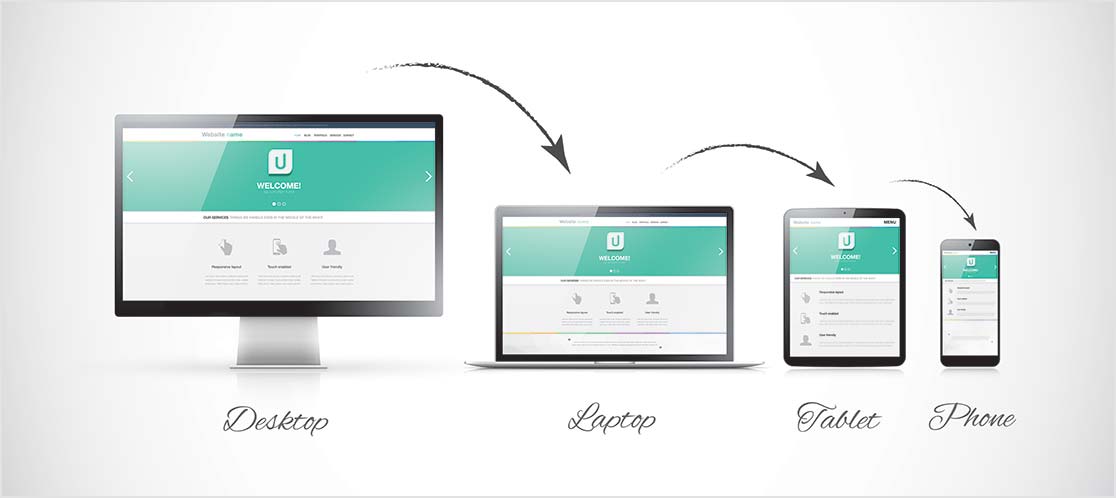
The content is displayed in one column on the smartphone, two on the tablet and three on the desktop. For responsive design, the absolute size method doesn't work because devices vary in size. In print, publishers determine the size of what is displayed (and where) in absolute measures. When the internet arrived, this trend continued, and designers defined websites in pixel sizes.
We will need to constantly work with new devices, resolutions and technologies to continually improve the user experience as technology evolves in the coming years. 8 Faces’ website design is flexible, right down to a standard netbook or tablet device, and expands in content quantity and layout width when viewed on wider screens or expanded browsers. When viewed on narrower screens, the featured issue on the right is cut out, and the content below is shortened and rearranged in layout, leaving only the essential information. The above code in this media query applies only to screen and browser widths between 800 and 1200 pixels.
If using breakpoints, best practices encourage defining media query breakpoints with relative units rather than absolute sizes of an individual device. For example, the following media query tests to see if the current web page is being displayed as screen media (therefore not a printed document) and the viewport is at least 80rem wide. The CSS for the .container selector will only be applied if these two things are true. It is a term used to describe a set of best practices used to create a layout that can respond to any device being used to view the content. Creating a non-resizable web page by setting a fixed width doesn't work either; that leads to scroll bars on narrow devices and too much empty space on wide screens. Additionally, the template provides opportunities for effectively presenting a company's work or services.
Top 5 Reasons to Use Responsive Website Design - Tech.co
Top 5 Reasons to Use Responsive Website Design.
Posted: Thu, 08 Jan 2015 08:00:00 GMT [source]
Still, responsive design aids great UX since, by default, it requires uniformity, seamlessness, and simplicity in your design efforts. It is SEO-friendly, and the multiple CMS and frameworks, such as WordPress and Bootstrap, make it very cheap to implement. Whether or not WordPress sites are responsive depends on the theme of your WP site. A WordPress theme is the equivalent of a template for a static website and controls the design and layout of your content.
Adaptive design involves creating a unique web layout for each device, so a website appears on a device’s screen in the layout dedicated to that particular device. A responsive web design is all about meeting and then surpassing the expectations of potential customers. People encounter inconsistent mobile experiences, slow pages, confusing page setups and other problems too often. If companies remove these pain points, they can win over users and convert them into loyal customers. In responsive design, you can define rules for how the content flows and how the layout changes based on the size range of the screen. The difference between responsive design and adaptive design is that responsive design adapts the rendering of a single page version.

They're not a popular choice among designers and businesses because you have to create them separately, leading to higher upfront and maintenance costs. This represents an increase over the second quarter of 2022 when 55% of global Internet users accessed the Internet via mobile devices. There has been a significant increase in Internet usage via mobile devices between the third quarter of 2013 and the beginning of 2023.
Users could zoom in and pan around the website to view the bits they were interested in, but it looked bad. Viewport units vw can also be used to enable responsive typography, without the need for setting breakpoints with media queries. 1vw is equal to one percent of the viewport width, meaning that if you set your font size using vw, it will always relate to the size of the viewport.
If anything is below this limit, the style sheet link or styles will be ignored. Anything above the maximum browser or screen width specified would not apply to the respective media query. One nice thing about the iPhone and iPod Touch is that Web designs automatically rescale to fit the tiny screen. A full-sized design, unless specified otherwise, would just shrink proportionally for the tiny browser, with no need for scrolling or a mobile version. The JavaScript file inserts a base element that allows the page to separate responsive images from others and redirects them as necessary.
If you’re new to web design, development, or blogging, you might wonder why responsive design matters in the first place. Responsive web design emerged as a concept and approach to building websites in 2010 with web designer Ethan Marcotte's article “Responsive Web Design," which appeared in A List Apart [2]. If you instead specify a column-width, you are specifying a minimum width. The browser will create as many columns of that width as will comfortably fit into the container, then share out the remaining space between all the columns.
The world is shifting to a mobile-first world and any website that doesn't adapt to this shift risks being left behind. Most businesses now have a robust online presence, but many fail to meet today's customer expectations by not optimizing their websites for mobile devices. To create an effective, responsive design, you need tools to quickly and easily update your website without redeveloping it completely. Moreover, responsive web design can lead to better search engine optimization (SEO) for your website. Search engines, including Google, prioritize websites that provide a smooth and efficient user experience. By meeting these criteria, a website becomes more appealing to users and stands a better chance of ranking higher in search results.


No comments:
Post a Comment